
Inside the Studio: Our Creative Process From Idea to Final Design
Shared my thought processes.
NEWS AND UPDATES (INPAPERSTUDIOS)
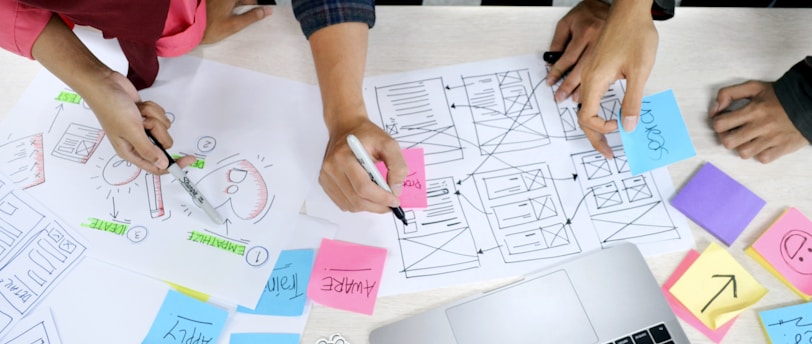
📰 Inside the Studio: Our Creative Process From Idea to Final Design
When people look at creative work, they usually only see the final product. They see the logo on a website, the poster on the wall, the animation on social media, or the campaign in motion. It looks polished, complete, and effortless. But what they don’t see is the invisible world behind it — the countless hours of research, the messy drafts, the decisions that were made and remade, and the emotional rollercoaster of getting it right.
At Inpaper Studios, we often describe design not as a single act but as a journey. It’s a journey that begins long before a shape is drawn or a color is picked, and it continues long after the final file is delivered. Our approach is different from many creative agencies.
Most agencies achieve success by narrowing their focus. Some become “video agencies,” some “branding agencies,” and some limit themselves even further, only doing one very specific type of editing or animation. That model works for them, but it’s never been our path. We don’t believe creativity should be boxed into one category.
We don’t want to simply copy existing formulas or repeat the same style endlessly. Instead, we thrive on experimentation, storytelling, and exploration. We want every project to feel like it has a heartbeat and a purpose.
This belief shapes the way we work and the way we think. And today, we want to take you inside our studio — to show you not just what we create, but how we create, and why our process matters.
🎨 Step 1: Research and Understanding
If there is one step that defines whether a design will succeed or fail, it is research. It’s the most invisible part of the process — clients rarely see it, audiences never see it — but it’s the backbone of everything.
When people outside design imagine how work is made, they often picture someone opening Photoshop and instantly sketching ideas. But that’s not design. That’s decoration. True design begins long before the first pixel is placed. It begins with understanding.
When we start a project, the first question is never “What colors should we use?” The first question is: Who is this for? What does it need to say? Why does it exist?
Here’s what our research typically involves:
Understanding the brand — What are its values, its history, its purpose? Does it stand for fun, elegance, boldness, sustainability, or something else?
Understanding the market — What’s happening in the industry? Are there trends shaping customer expectations? Where are the gaps?
Target audience analysis — Who is this design for? What are their ages, habits, lifestyles, and pain points? What emotions influence their decisions?
Competitor analysis — Who else is competing for the same audience’s attention? What do their designs look like, and how do they position themselves?
Brand perception — How do people currently view the brand? Is it seen as modern, outdated, friendly, serious, trustworthy, or something else?
Positioning study — Where does the brand want to be in the minds of its audience? Premium? Accessible? Innovative?
Visual and verbal audit — Does the brand’s logo, typography, and tone of voice currently align with its goals? Is there consistency?
Cultural and emotional insights — What cultural symbols, colors, or themes resonate with the audience? What emotional triggers should the design connect with?
Trends and opportunities — What’s coming next in design, technology, or culture that the brand could use to stand out?
Testing and validation — Are early concepts working? Does the message land with real people? What needs adjusting?
In short, brand research = audience + competitors + market + perception + positioning + testing.
Skipping this step is one of the biggest mistakes a designer can make. Without research, a design might look nice — but it won’t mean anything. It won’t connect. And design that doesn’t connect is forgotten.
We believe design is the visual voice of a brand. Just like a human voice, if it doesn’t sound right, people stop listening.
🎨 Step 2: Making the Right Decisions
Research gives us knowledge, but knowledge has to be translated into decisions. This is the stage where the direction of the project truly takes shape.
Every design involves hundreds of decisions:
Which colors capture the brand’s mood?
What fonts communicate the right personality?
Should the layout feel playful or serious?
Should the spacing feel tight and energetic, or wide and calm?
Should the design be bold and loud, or quiet and refined?
Each of these choices might seem small, but together they define how people will experience the brand.
Let’s look at an example:
A children’s toy brand: bright, saturated colors, soft rounded fonts, playful illustrations. The design should feel fun, safe, and full of imagination.
A luxury fashion label: minimal color palette (black, white, maybe gold), elegant typography, clean lines, and lots of space. The design should feel exclusive, sharp, and aspirational.
Both are “design.” Both use text, shapes, and colors. But the decisions behind them are completely different.
And here’s the challenge: anyone can make decisions, but not everyone can make the right ones.
Good decisions require a balance of creativity and strategy. They require experience — knowing what has worked in the past, what will resonate now, and what will still feel fresh tomorrow. They also require courage, because often the best decisions are not the easiest ones.
This is why design is not just “art.” It’s communication. Every decision shapes the way a message will be received. Every detail matters.
🖌️ Step 3: Action and Execution
Once the decisions are made, the real building begins. This is the stage most people imagine when they think of design: sitting at a desk, tools open, turning ideas into visuals.
But execution is not as simple as pressing buttons. It is the process of translating vision into reality.
Here’s something important: the tool doesn’t matter as much as people think. Some designers swear by Photoshop, others by Illustrator, Figma, Procreate, or even Canva. But the truth is, the audience never asks, “What software was this made in?” They only ask, “Does this design make me feel something?”
The job of the designer is to use whichever tool best brings the vision to life. Tools are like brushes to a painter — they matter, but they don’t define the art.
Execution is where trial and error happens. We test layouts, move elements, swap colors, and adjust typography until it feels right. This process is invisible in the final design, but it’s where the hours go. Every alignment, every proportion, every shade is tested against the vision we set earlier.
Good execution isn’t about speed. It’s about craft. By the time the design is complete, countless micro-decisions have been made. The audience may not notice them consciously, but they feel them. That’s why some designs “hit different.” They carry the weight of careful execution.
🍰 Step 4: Presentation (The Cherry on the Cake)
Finally, we arrive at presentation. This stage is often underestimated, but it’s just as important as the design itself.
Imagine baking a beautiful cake and placing it on a messy table covered in crumbs. The cake itself may be perfect, but the presentation ruins the impression. The same principle applies to design.
A design doesn’t live in isolation. It lives in mockups, on websites, in packaging, in campaigns, and in the real world. If it isn’t presented properly, people won’t feel its full impact.
That’s why we take presentation seriously. We use mockups to show how a logo would look on packaging, or how a poster would look on a street wall. We prepare brand guidelines that explain not just the design itself, but how it should be used in the future. We think about consistency, because consistency is what builds trust.
Presentation is the bridge between design and perception. It’s the moment when the audience first meets the brand in its new form. If that moment fails, the entire design risks being overlooked.
🌟 Final Thoughts
Our creative process is not just a pipeline of steps. It’s a mindset. Research builds understanding. Decisions give direction. Execution brings ideas to life. Presentation ensures impact.
Together, these steps form the DNA of our work. They are the reason we don’t rely on templates, shortcuts, or quick fixes. Because design, at its best, is not about decoration. It’s about communication. It’s about telling a story that people remember.
At Inpaper studios, every project we take on is more than just a design. It’s a collaboration, a story, and a responsibility. We create not only to make things look good, but to make them mean something.
And that is the journey — from idea to final design — that defines who we are.
Address
Royal City, Shivpuri Road
Jhansi-284003
Contacts
+91-9264968164 | +917024234148
inpaperstudios@gmail.com